0

What Types of Leather Are Used for Shoes? Top 33 Leather Types

N-SHOES Guide · Materials

What Types of Leather Are Used for Shoes? Top 33 Leather Types

Leather decides how a shoe breathes, copes with rain and how much care it needs. Here are 33 types of leather, from full-grain to shell cordovan and yuft. Filter by type or wearing scenario, compare durability and care, and learn how to tell genuine leather.

33 typesCompare
33leather types in one guide
4groups: grain, finish, napped, raw material
3main tanning methods
14 daysto exchange or return

33 types of shoe leather

Filter by group or scenario. The dots show durability and care effort from 1 to 3.

Types: 33

  1. 01

    Full-grain smooth

    Keeps the natural grain layer with its pores. The strongest and most breathable, it develops a fine patina over time.

    Durability ●●●Care ●○○
  2. 02

    Aniline

    Dyed through with transparent dyes and no surface coating. The natural grain shows, but it stains and absorbs water easily.

    Durability ●●○Care ●●●
  3. 03

    Semi-aniline

    Aniline leather with a thin protective pigment layer — a balance between natural look and practicality.

    Durability ●●○Care ●●○
  4. 04

    Corrected grain

    The surface is lightly buffed to remove flaws and then coated. Even and scratch-resistant.

    Durability ●●●Care ●○○
  5. 05

    Pigmented

    Covered with a dense pigment and sealant layer. Uniform colour, the easiest care and good water resistance.

    Durability ●●●Care ●○○
  6. 06

    Patent

    Coated with a polyurethane or lacquer film with a mirror shine. Barely breathes; dislikes frost and sharp creasing.

    Durability ●●○Care ●●○
  7. 07

    Floater

    Long drum milling gives the surface a natural large grain. Soft and good at hiding small scratches.

    Durability ●●●Care ●○○
  8. 08

    Crinkled (washed)

    Gets natural wrinkles from wet processing. Signs of wear are barely visible.

    Durability ●●○Care ●○○
  9. 09

    Pull-up

    Impregnated with oils and wax: the colour lightens where it flexes. Water-repellent and easily refreshed with cream.

    Durability ●●●Care ●●○
  10. 10

    Crazy Horse

    Oiled leather with a waxed surface: scuffs and light marks create a vintage effect.

    Durability ●●●Care ●●○
  11. 11

    Embossed

    A relief pattern is pressed into the surface. Embossing hides flaws and adds texture.

    Durability ●●●Care ●○○
  12. 12

    Basket-weave emboss

    Embossing that imitates woven sacking. Matte, practical and hides small scratches.

    Durability ●●●Care ●○○
  13. 13

    Shagreen

    A fine, rough-grained surface, natural or embossed. Traditionally goat or sheep leather.

    Durability ●●○Care ●○○
  14. 14

    Exotic-print emboss

    Crocodile, python or ostrich pattern on cattle hide. Striking look at the price of ordinary leather.

    Durability ●●○Care ●●○
  15. 15

    Patina

    Hand-coloured in several layers for deep colour transitions. A classic of men's dress shoes.

    Durability ●●○Care ●●○
  16. 16

    Distressed

    Artificial scuffs, scratches and wrinkles imitate worn leather. Suits casual and military styles.

    Durability ●●○Care ●○○
  17. 17

    Metallic & pearlescent

    A gold, silver, pearl or holographic finish. Dislikes abrasive brushes.

    Durability ●○○Care ●●●
  18. 18

    Perforated

    Small holes form a pattern and improve ventilation. Typical of summer shoes and brogues.

    Durability ●●○Care ●●○
  19. 19

    Laser-engraved

    A laser burns in a pattern or lettering, creating relief without dye.

    Durability ●●○Care ●●○
  20. 20

    Printed

    Images are applied by heat transfer or UV printing: prints, marble, photos. Durability depends on the top coat.

    Durability ●○○Care ●●○
  21. 21

    Nubuck

    The grain side buffed to a velvety nap. Breathable, but needs a brush and protective spray.

    Durability ●●○Care ●●●
  22. 22

    Oiled nubuck

    Nubuck impregnated with oils and wax. Repels water better than standard nubuck.

    Durability ●●●Care ●●○
  23. 23

    Suede

    Traditionally soft oil-tanned deer, goat or sheep skin; today the name also covers napped leather from the flesh side.

    Durability ●○○Care ●●●
  24. 24

    Velour

    Leather napped on the flesh (inner) side. The nap is longer than nubuck's.

    Durability ●●○Care ●●●
  25. 25

    Split leather

    The lower layer separated when the hide is split. Strong and affordable, napped or coated.

    Durability ●●○Care ●●○
  26. 26

    Sheepskin & mouton

    Sheepskin with the wool on — natural fur insulation for winter footwear.

    Durability ●●○Care ●●○
  27. 27

    Chevreau (kid)

    Chrome-tanned goatskin: thin, dense, elastic, with a fine grain pattern.

    Durability ●●○Care ●●○
  28. 28

    Sheep leather

    Chrome-tanned sheepskin. Softer and weaker than goatskin, so it suits light shoes.

    Durability ●○○Care ●●○
  29. 29

    Calfskin & box calf

    Leather from calves. Box calf is chrome-tanned calfskin with a smooth dense surface, a dress-shoe classic.

    Durability ●●●Care ●○○
  30. 30

    Cowhide

    Hide from adult cattle: thicker and coarser than calfskin, the basis of everyday boots.

    Durability ●●●Care ●○○
  31. 31

    Shell cordovan

    A dense layer from a horse's rump. It ripples instead of cracking at the flex; one of the most expensive materials.

    Durability ●●●Care ●●○
  32. 32

    Yuft (Russia leather)

    Thick combination-tanned leather heavily stuffed with fats. Water-resistant and tough, for work boots.

    Durability ●●●Care ●○○
  33. 33

    Exotic leathers

    Crocodile, python, ostrich, stingray. Unique pattern and high price; trade in many species is regulated by CITES.

    Durability ●●○Care ●●●

Comparing popular leather types

LeatherBreathesWaterDurabilityCare
Smooth●●●●●○●●●cream once a week
Pull-up●●●●●●●●●wax or cream, polish
Nubuck●●●●○○●●○brush, spray, eraser
Suede●●●●○○●○○suede brush, spray
Patent●○○●●○●●○patent cleaner, avoid frost
Split●●○●○○●●○brush, water-repellent spray

How to tell genuine leather

Four simple checks you can do in the store.

  • EdgeThe cut edge shows interwoven fibres, not a fabric backing or uniform plastic.
  • PoresThe surface has an irregular pattern of pores and fine creases, not a repeated stamp.
  • WarmthGenuine leather warms quickly in your palm and doesn't stay cold and “sticky”.
  • LabelA hide pictogram means leather, a hide with a diamond means coated leather, a weave means textile and a diamond means other materials.

Video: types of shoe leather

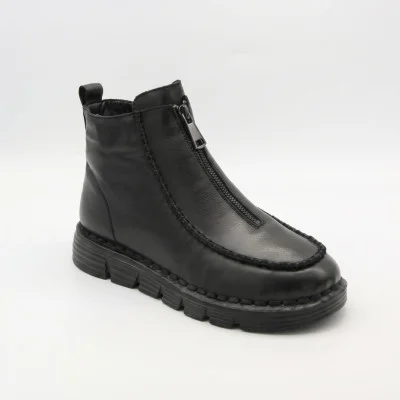
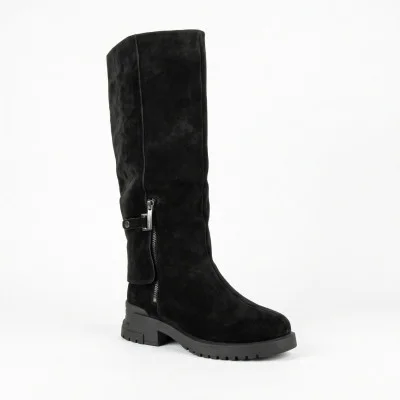
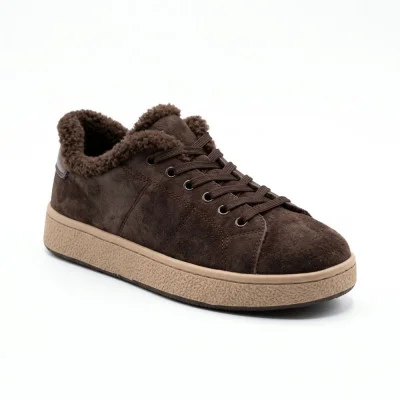
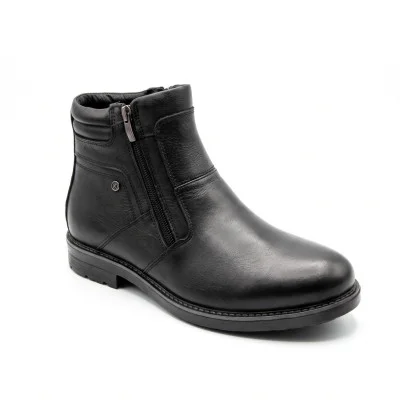
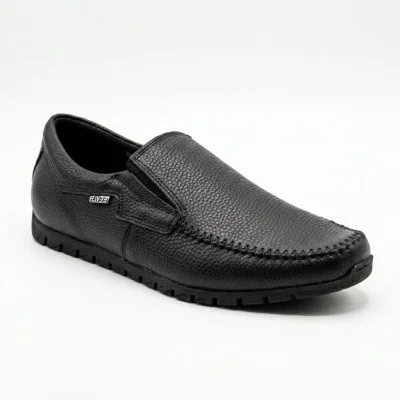
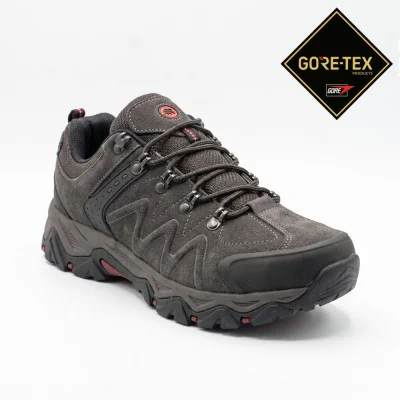
Leather and suede shoes in stock

Compare smooth leather and suede in person: new models you can order or try on at the N-SHOES store in Kharkiv.

Models: 6

Shoe leather: encyclopedic overview

Structure of a hide

A hide consists of the grain layer, the dermis (corium) and the flesh side. The grain layer is the most valuable: dense and hard-wearing. Splitting divides a thick hide into the grain part and the split.

Tanning

Tanning turns raw hide into a stable material. Vegetable tanning uses tannins from bark and wood; chrome tanning uses chromium salts, is faster and gives softer leather. Combination tanning uses both.

History

Leather is one of the oldest footwear materials: surviving leather shoes are several thousand years old. Chrome tanning spread in the late 19th century and dominates shoe production today.

Labelling

In the EU and many countries, upper, lining and sole materials are marked with pictograms: a hide for leather, a hide with a diamond for coated leather, a weave for textile and a diamond for other materials.

Questions & answers

What's the difference between nubuck and suede?

Nubuck is buffed on the grain side, so its nap is short and dense. Suede has a longer, softer nap and is usually thinner and less durable.

Which leather is best for winter?

Pull-up, oiled nubuck, pigmented leather and cowhide cope well with water and de-icing salt. For insulation choose natural sheepskin or wool.

Can I wear suede in the rain?

Yes, if you treat it with water-repellent spray in advance, then dry it at room temperature after the walk and brush the nap.

How is split leather different from genuine leather?

Split is genuine leather too, but it is the lower layer without the grain surface. It is less dense, so it is often napped or coated.

How do I care for patent shoes?

Wipe with a soft cloth and patent cleaner, avoid wearing them in hard frost and store pairs so they don't touch each other.

Feel the difference in materials in person

Try on leather and suede pairs at the N-SHOES store (Kharkiv, 18 Donetskyi Lane, KLASS mall, 3rd floor) or order online with free store pickup (0 ₴) or Nova Poshta delivery.

Comments
Related articles
06/02/2021
How to Choose Comfortable Shoes: 5 Simple Tricks That Help You Pick a Comfortable Pair
An N-SHOES guide: 5 simple tricks for choosing comfortable shoes with fitting checks, a scored comfort test, the anatomy of a comfortable shoe, myths and models in stock...
07/02/2021
How to Choose the Right Shoe Size? Size Chart and Guide
An N-SHOES sizing guide: a size calculator by foot length, 4-step measuring instructions, an EU / UK / US chart and tips for ordering online without mistakes...
17/04/2026
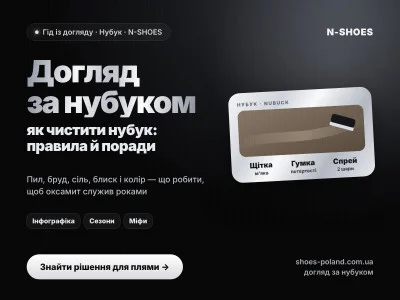
How to Care for Nubuck Shoes: Nubuck Shoe Care and How to Clean Nubuck — Rules, Tips and Infographic
An N-SHOES nubuck care guide: an interactive stain fixer, an infographic, nubuck vs suede vs oiled nubuck, a seasonal calendar, home remedies checked and models in stock...
04/05/2021
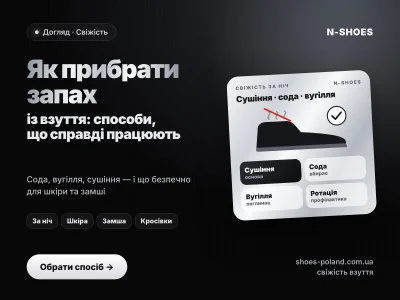
How to Get Rid of Shoe Odour? Tips to Remove Bad Smells from Shoes
An N-SHOES guide to shoe odour: where it comes from, 5 step-by-step scenarios, a safe / unsafe guide for leather, suede, textile and fur, and breathable shoes in stock...