0₴
Checkout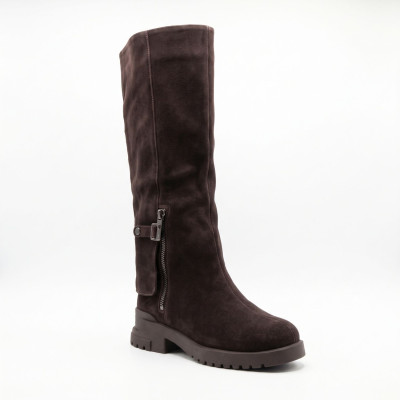
Definition
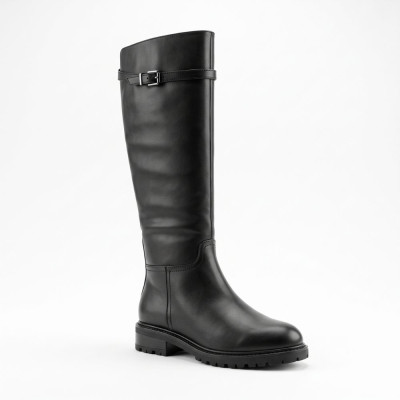
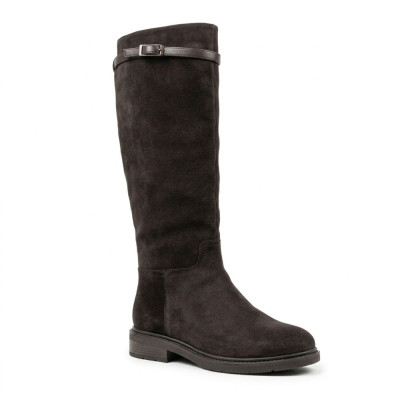
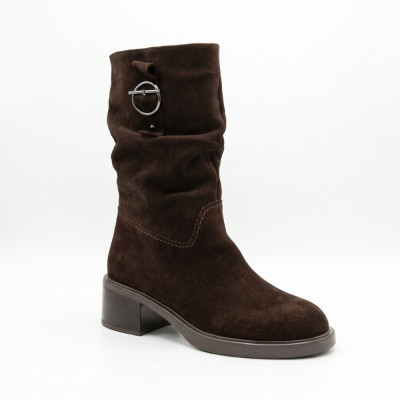
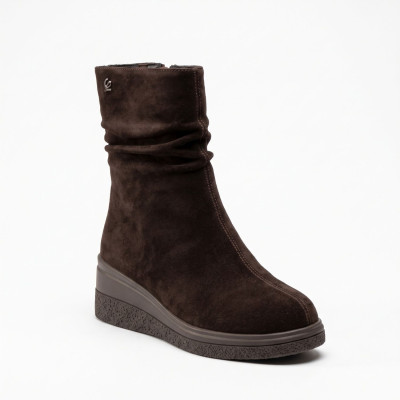
Boots are footwear with a shaft that covers the ankle and part of the shin or the whole leg up to the thigh. Height sets them apart from ankle boots: in the classic sense, a boot shaft reaches at least mid-calf. Short boots with a 15–25 cm shaft are a transitional form between ankle boots and boots.
History
Tall footwear made of soft leather was worn by the nomadic peoples of Eurasia because it protected the leg when riding. In Ukraine, Cossack boots of morocco leather are well known, and coloured women's boots on a low heel were long part of festive dress. Thigh-high boots began as 17th-century cavalry footwear. Boots became mass women's fashion in the 1960s with low white go-go boots; the 1970s brought tall platform boots, and the 2000s — UGG-style boots, slouch tubes and western boots.
Classification by height
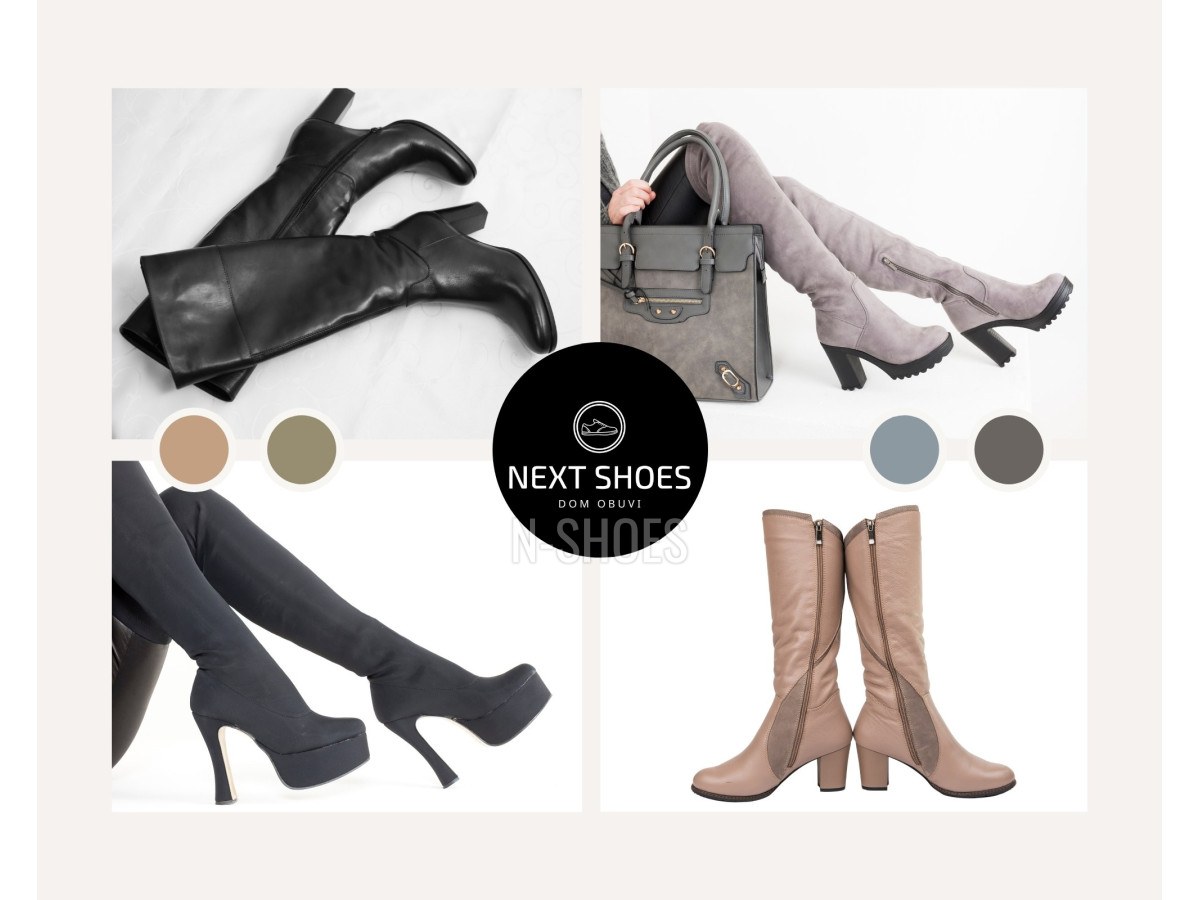
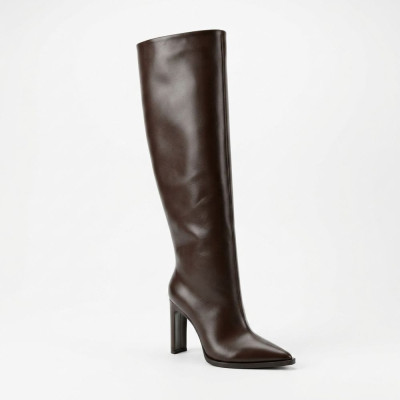
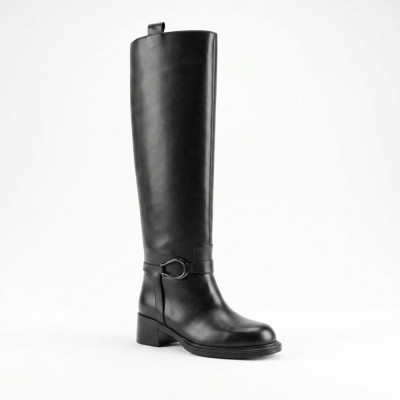
Ankle and short boots — shaft up to 25 cm; mid-calf boots — 25–35 cm; classic knee-high boots — 35–45 cm; over-the-knee boots — above the knee, from 50 cm. The taller the shaft, the more calf width matters: 2–3 extra cm cause wrinkles, too little means pressure and a zip that will not close.
Shaft shape
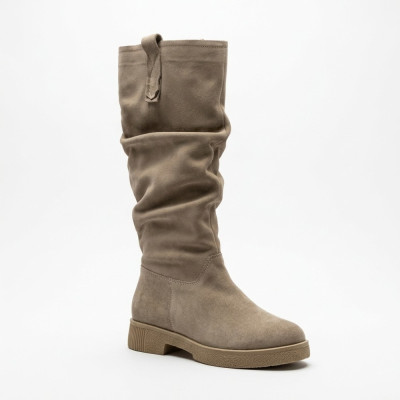
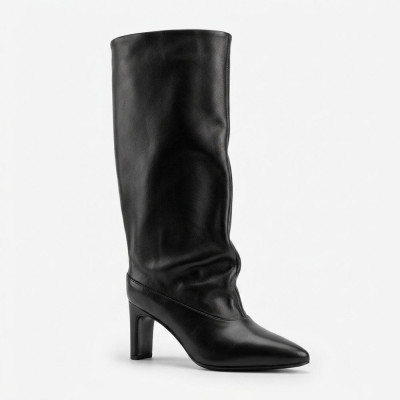
A fitted shaft follows the leg; sock boots are made of stretch leather or stretch suede. Tube boots have a straight wide top, often with soft folds (slouch). Western boots have a pointed or slanted toe, a slanted heel and often embossing. Convertible boots let you fold down or detach part of the shaft and wear them as ankle boots.
Season and lining
Mid-season boots are unlined or have a thin flannel lining. Mild-winter ("euro-winter") boots use thin wool or flannel for temperatures around zero; this type is popular in European countries with mild winters. Winter boots have natural fur or dense wool. Natural fur is springy: the pile recovers quickly after pressing, and leather is visible between the fibres; faux fur has a textile base.
Upper materials
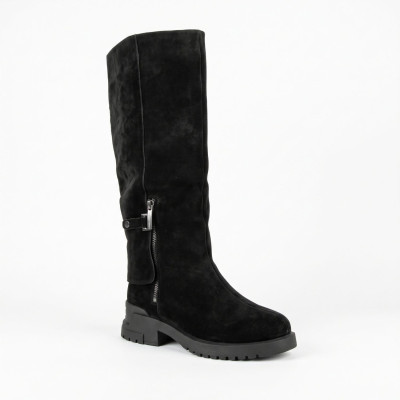
Genuine leather is soft, durable and breathable, and with proper care lasts several seasons. Patent leather has a glossy coating and breathes less. Suede and nubuck are leathers with a napped surface: beautiful, but sensitive to water and de-icing salts, so they need a protective spray. Modern faux leather looks like leather and costs less, but copes worse with frost and wears out faster.
Sole, heel and fastening
Check the sole for flexibility: it should bend easily at the toe. A stitched sole is more reliable than a glued one — the seam backs up the glue. For winter, rubber, TPR and polyurethane with a tread work best, 1–2 cm thick or more so the cold from the ground does not reach the foot. Stable options are a wide block heel, a wedge and a lug platform. Zip and unzip several times: on winter models the zip is usually on the side, and laces from the toe hold the foot better on ice.
How to try boots on
It is better to buy winter boots in advance, before the frost: in the cold, circulation slows and the foot shrinks slightly, so a size chosen on frozen feet may pinch indoors. Try shoes on in the afternoon, in the socks or tights you will wear, and walk — the heel should not slip, and the toes need about 1 cm of room. Check the shaft at the widest part of the calf.
Care and storage
After being outside, wipe salt and de-icing chemicals off and dry boots at room temperature — not on a radiator. Feed leather with cream; brush suede and nubuck and renew the water-repellent spray. For the summer, clean the boots, stuff them with paper or use shaft shapers, and store them in a box. Choose small, stitched-on hardware: large glued decorations come off and pull the shaft out of shape.